A Pilot's Guide to Inflight Icing
Module I - Before You Fly
Know the Situation
Section: Weather Overview
Start This SectionWeather Overview Weather
Based on the information available in the weather package, you can evaluate the risk of an icing encounter and develop a strategy to minimize exposure and exit the conditions if necessary.
To determine whether the conditions along any portion of a planned route of flight are likely to produce serious icing encounters, you must determine where the temperature range and the moisture content of the air is conducive to icing. If this air is unstable or there are fronts or mountains that can lift it, the risk of in-flight icing can be high. To generate a plan to minimize exposure to icing or exit from an unexpected serious icing encounter, you must know where the cloud tops and bases are relative to the freezing level and underlying terrain.
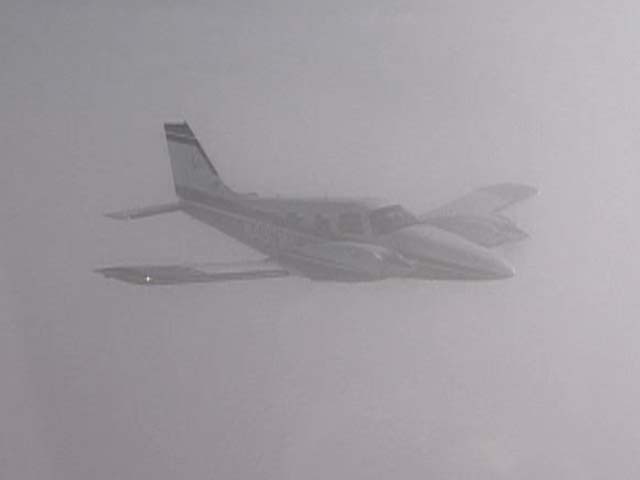
Seneca in cloud tops
Weather Overview Weather
In this section, we examine how cloud formations, geography, seasons and fronts affect the risk of an icing encounter.
Cloud Formations
Geographic Effects
Seasons
Frontal Effects
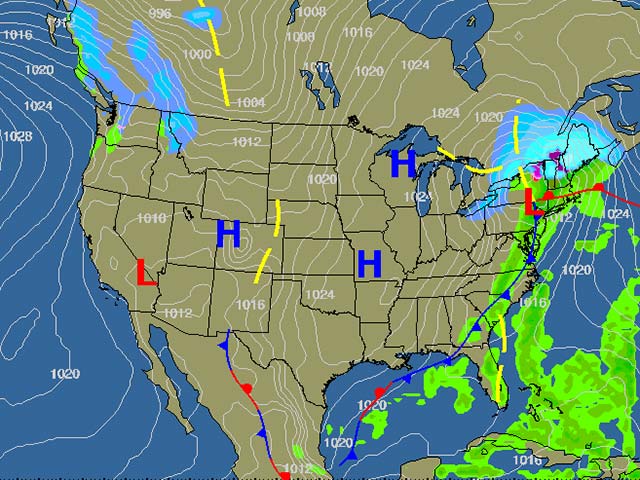
Map showing highs, lows, and fronts