A Pilot's Guide to Inflight Icing
Module II - In the Airplane
Icing Cues
Section: Aircraft Components
Start This SectionAircraft Components Icing Cues
On almost every airplane, there is some component that will accrete a substantial amount of ice before significant amounts of ice have built-up on the airfoils. In general, smaller components will provide the first signs of ice because of their high collection efficiency.
Check for ice accretion on wiper blades, probes, antennae, and the unheated portions of spinners and engine inlets. These are often the first parts of the aircraft to accrete ice. Your POH or AFM may also provide additional guidance on where to look for the first signs of ice.
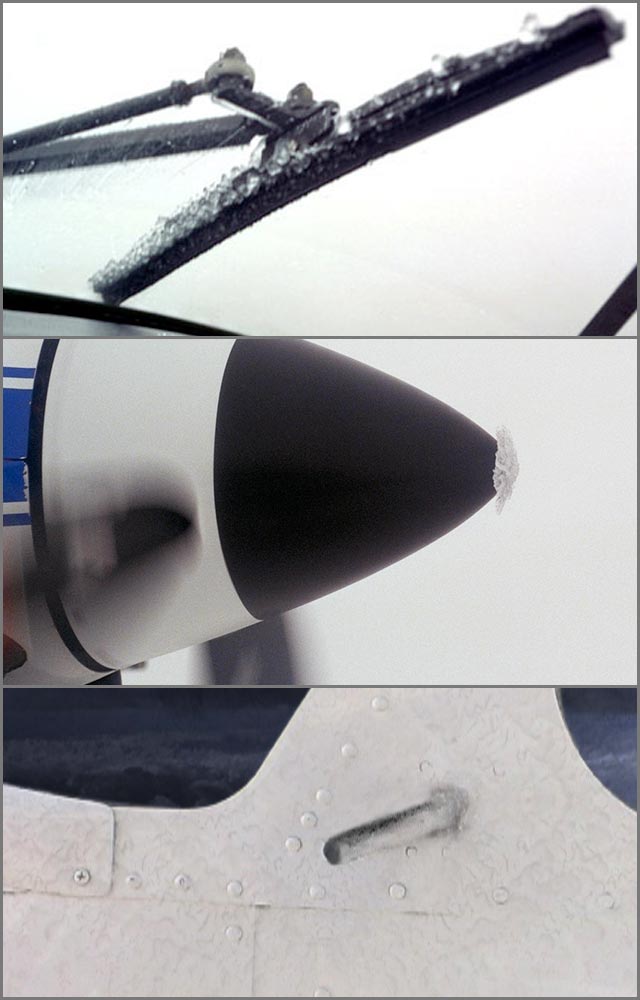
First signs of ice
Aircraft Components Icing Cues
Water streaming on the windscreen indicates that the aircraft has penetrated a cloud with a large amount of liquid water. If the temperature is within the icing range, you may have a serious icing encounter.
If ice forms on the side windows, on the wing leading edge aft of the protected area, or aft of where it "normally" accretes (e.g., on a spinner), you have probably penetrated supercooled large droplet (SLD) conditions.
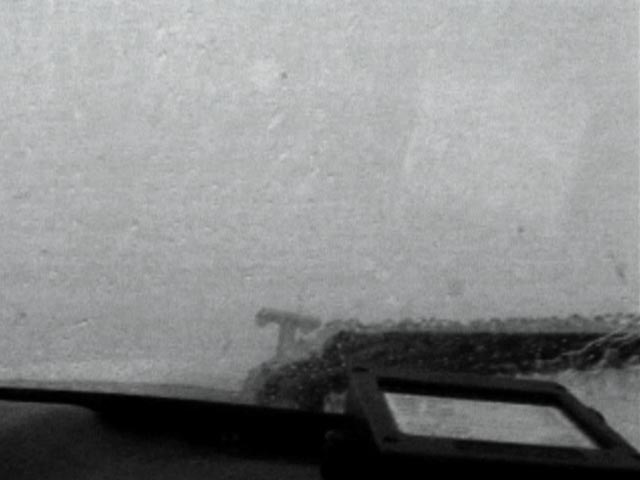

Signs of a serious icing encounter
Related Information
Michael Hudson, Former EMB-120 Pilot
Aircraft Components Icing Cues
Warning
Detecting ice at night poses special problems. The first aircraft components to accrete ice may not be lit by the inspection lights, and ice may look different at night. Clear ice may be especially difficult to detect at night. Consider cycling the boots to cause the clear ice to crack and make visual detection easier. But don't rely solely on visual detection to determine the onset of ice accretion.
Use additional cues, e.g., performance and handling, to help you assess the severity of the icing encounter. Be alert. Under some icing conditions, even a 3-minute exposure can substantially affect the handling of the aircraft.
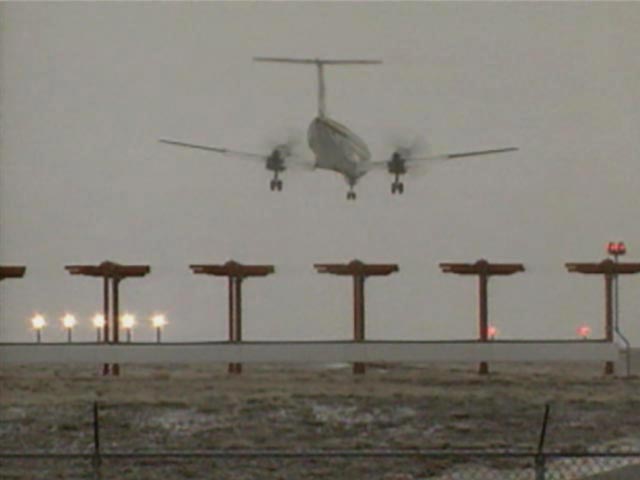
Detecting ice at night poses special problems.
Related Information
Example of Clear Ice