A Pilot's Guide to Inflight Icing
Module II - In the Airplane
Icing Cues
Section: Instruments and Handling
Start This SectionInstruments and Handling Icing Cues
Changes in the aircraft's performance and handling can provide cues to the extent of ice accretion. By paying close attention to these cues you can detect an icing encounter and take action before it becomes a serious problem. In dual pilot operations, the pilot flying is likely to be the first to notice anything unusual in the handling or performance of the aircraft. However, he or she may be so busy flying the aircraft that small anomalies go undetected. Of course, when there are two pilots at the controls, the pilot monitoring should be alert to other cues of ice accretion. These ice accretion cues can include:
- Gradual loss of airspeed
- Decrease in climb rate for a selected airspeed
- Higher than normal power settings for a given speed
- Changes in nose up trim
- Changes in control authority and/or feel
- Ice detector activation

Icing may cause gradual loss in airspeed and decrease in climb rate
Instruments and Handling Icing Cues
Pilot Action Recommendation
IF: You are in icing conditions.
ACTION: Hand fly the aircraft whenever cockpit workload allows. If the autopilot is used in icing, occasionally disconnect the autopilot to check for any unusual control forces or handling anomalies.
WHY: The autopilot will mask any tactile feedback of ice accretion.

Be prepared for abnormal responses when leveling off
Related Information
Bill Rieke, NASA Research Pilot
Instruments and Handling Icing Cues
Warning
During descent through icing conditions, performance indications such as pitch trim changes, airspeed loss and/or increased power requirements may not be noticeable until level off. Be especially alert when leveling for abnormal response from the aircraft. Anticipate that the effects of icing on the controls when leveling off may be quite dramatic and require immediate responses.
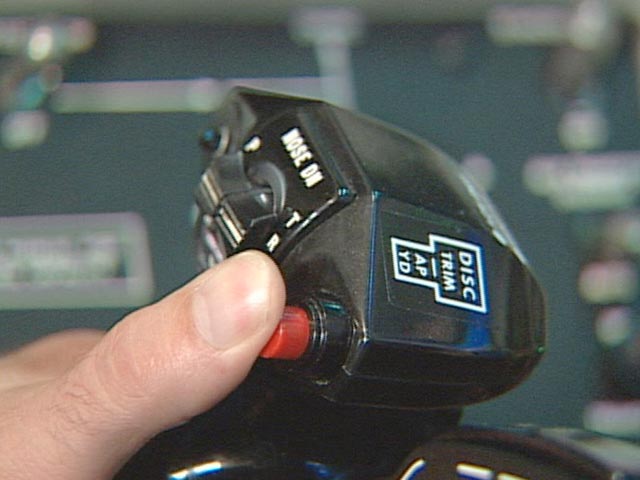
Be prepared for abnormal responses when leveling off
Instruments and Handling Icing Cues
If your aircraft is equipped with an ice detector and the detector is triggered, you are in icing conditions.
If your ice detector is certificated as "advisory," then you must rely primarily on your eyes and senses to detect ice, in addition to keeping an eye and/or ear on the detector. Even if your ice detector is certificated as "primary," it is still wise to be vigilant, since your eyes and other senses are usually excellent "ice detectors".
Remember ice detectors alert crews to the presence of icing conditions, but not necessarily the amount of ice or its effect on the aircraft's handling and performance.
Warning
Ice detectors are a good tool, but have limitations and may not be 100% reliable. The ice detector may not register if freezing precipitation flows off the ice detector. Also, some ice detectors may fail without alerting the pilot. Don't rely solely on the aircraft ice detector.


Rosemount ice detector
Related Information
The Rosemount System has a small probe thinner than a pencil that is vibrated up and down at a very high known frequency. As ice forms on the probe, the frequency or the amplitude of the vibration changes. The frequency changes are monitored and when the appropriate threshold is reached the ice detector indicator is triggered.
In a hot wire (latent heat) system, water droplets striking a wire-wound probe, heated to a known value, causes the heated probe to draw more current to maintain its temperature. This type is used primarily in engine air intake ducts.