A Pilot's Guide to Inflight Icing
Module II - In the Airplane
Flight Operations
Section: Departure - Think
Start This SectionDeparture - Think Flight Operations
Overview
Encountering icing in the terminal area can be extremely hazardous.
If icing on departure is a possibility, you should closely monitor the environment and the aircraft for signs of icing. Before take-off develop and brief a plan for dealing with an icing encounter should it occur.
In this section, we examine the risks associated with take-off, departure, and climb-out in icing conditions and outline specific actions to take during this phase of flight.
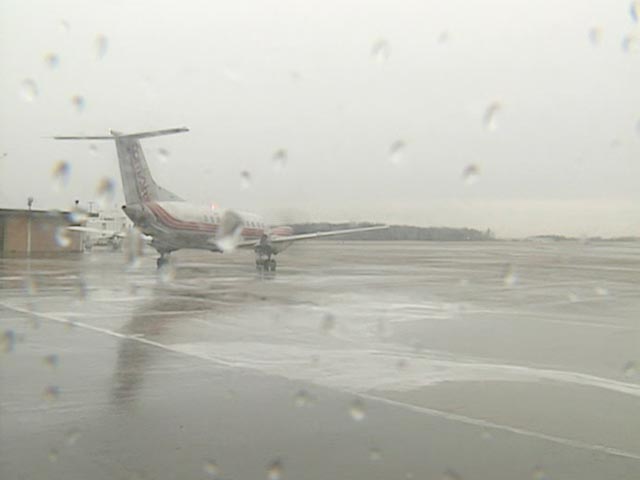
Icing in the terminal area can be extremely hazardous
Departure - Think Flight Operations
Risks
Icing encounters in the terminal area can be extremely hazardous because you are flying low and slow, and the traffic and terrain will frequently limit your options for avoiding or escaping the ice.
Ice accretion on take-off or climb-out may reduce the climb rate below the minimum needed to clear the surrounding terrain, making it impossible for you to execute standard operating procedures. If icing forces you to deviate from published departure procedures or altitudes, the risk of colliding with terrain is increased. Furthermore, the aircraft is close to the ground so the altitude available for recovery from pitch and roll upsets is limited.
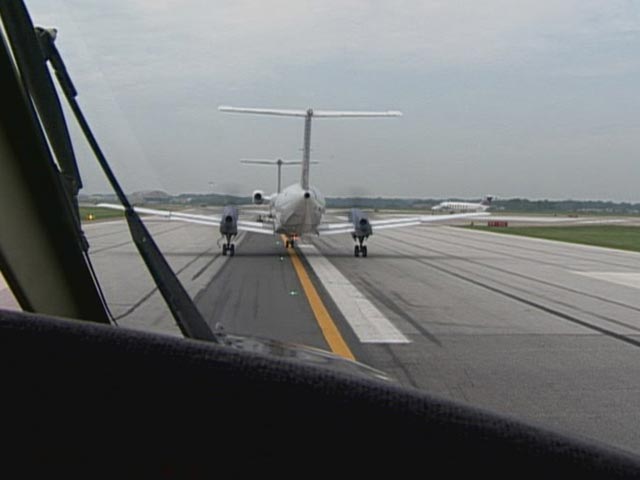
Aircraft awaiting departure
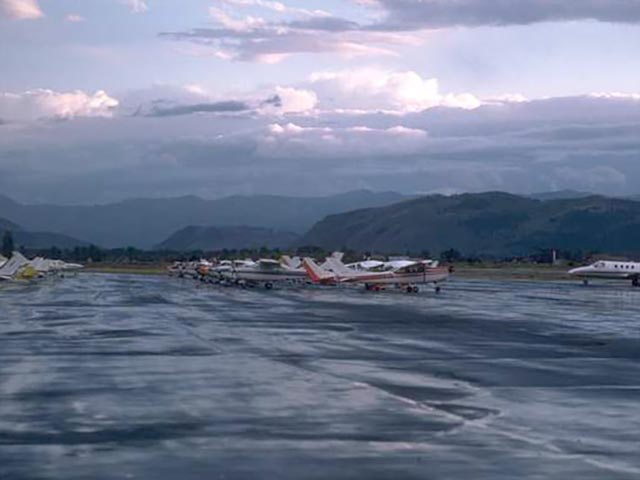
Traffic and terrain limit options in the terminal area
Departure - Think Flight Operations
Risks
Although the risk posed by an icing encounter on departure is high, if your aircraft has a properly functioning ice protection system and you have a plan for avoiding extended exposure to the icing, it is often possible to safely depart into icing conditions.
Before calling for your departure clearance, determine whether you can expect to encounter icing and at what altitude the icing is likely to occur using the weather analysis tools discussed in the first course module.
Standard departure procedures or ATC departure clearances may place you in icing zones for extended periods of time. Don't accept a clearance that unnecessarily increases the level of risk. If you believe that icing will be a problem on departure, ask ATC for a modified clearance.
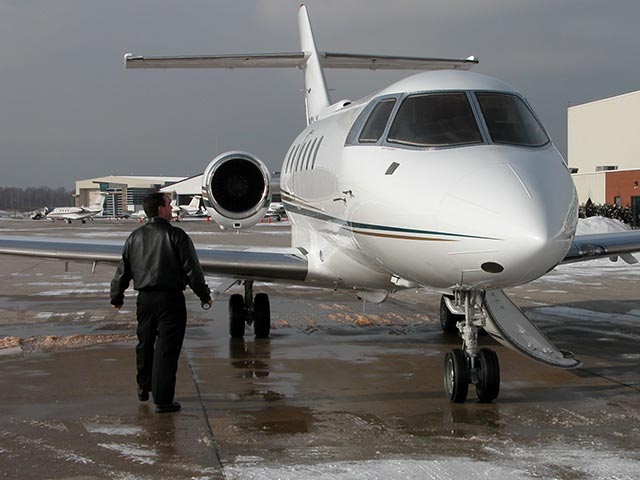
Ice accretion will degrade climb performance
Departure - Think Flight Operations
Plan
Before you leave the ground, you also should have a plan that clearly lays out what you would do should you encounter icing at any point on the departure. Whenever you have an icing encounter you have four basic options: continue on course and altitude, climb, descend, or maneuver around the icing area. If you are departing into cumulus icing conditions you will probably want to plan on maneuvering around the clouds if necessary to avoid serious icing. If you are departing into stratus conditions, and you know where the cloud tops are, continuing the climb to clear air may be your best option. Even if you do not know where the tops are, a climb may still be your best option. In stratus, changing your altitude by 3000 feet will usually take you out of the ice.
Ice accretion will degrade climb performance
Departure - Think Flight Operations
Plan
Climbing takes time and ice accretion on the airfoil will degrade your climb performance. If you are climbing at 1000 feet per minute, a 3000 foot climb will take approximately 3 minutes. A considerable amount of ice can accrete on the unprotected surfaces in that amount of time. If you encounter ice after reaching a safe altitude, you may be able to descend safely back to ice free air. In this case, a descent will be your best option.
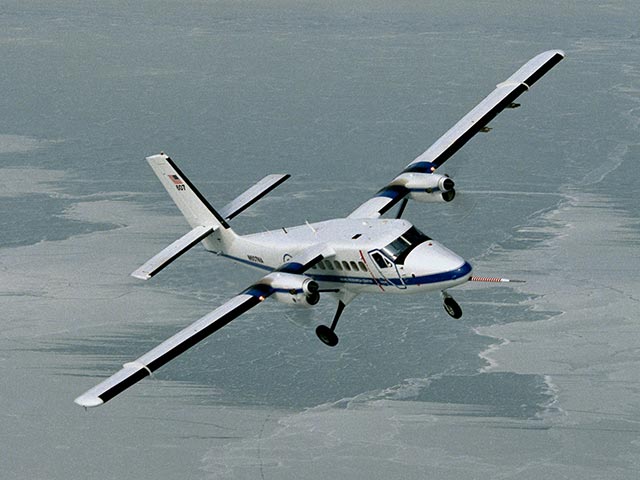
Take-off and climb
Departure - Think Flight Operations
Plan
Prior to take-off into icing conditions, note the recommended icing speeds if they are provided in your POH or AFM. If possible, set airspeed indicator bugs to these values.
Before beginning the take-off roll, check the adjusted take-off and braking distances for contaminated runways found in the AFM. Take-off distances on contaminated runways may be considerably longer than normal. In the case of an aborted take-off, stopping distances may also be substantially increased. Because of reduced traction, directional control may also be affected and the acceptable crosswind component may be decreased.
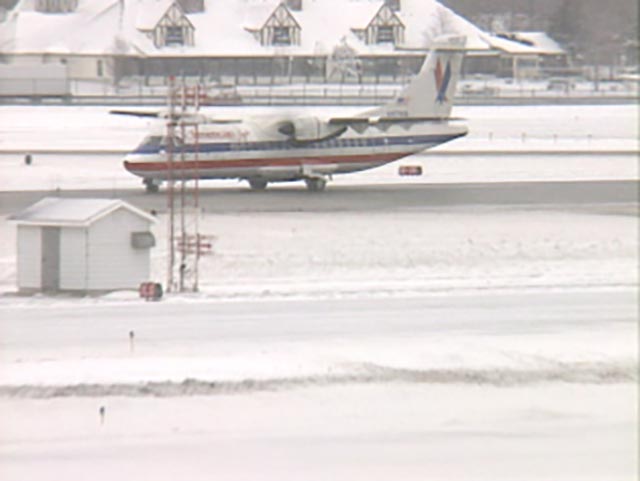
A contaminated runway implies longer take-off roll and stopping distances
Departure - Think Flight Operations
Monitor
During the climb-out and departure, remember to monitor the environment outside the airplane as well as the aircraft performance and handling.
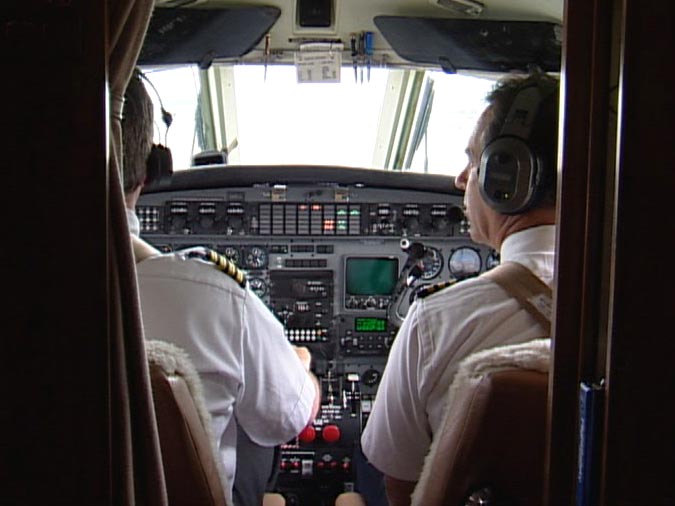
After applying take-off power, cross-check the instruments as usual but pay particular attention to airspeed and engine performance. Monitor the outside air temperature and note the freezing levels and cloud layers. Knowing where the air is warm or clear may be critical should you have a serious icing encounter. In multiple pilot operations, the pilot monitoring may be able to handle communications and monitor the environment while the pilot flying focuses on the aircraft instruments.

On take-off pay particular attention to airspeed and engine performance
Departure - Think Flight Operations
Monitor
Departure provides your first opportunity to directly observe the weather and compare what you experience with the weather reports and forecasts that you examined on the ground. If there are substantial discrepancies between the forecast and actual conditions, you will need to reassess the situation and you may need to revise your icing plan.
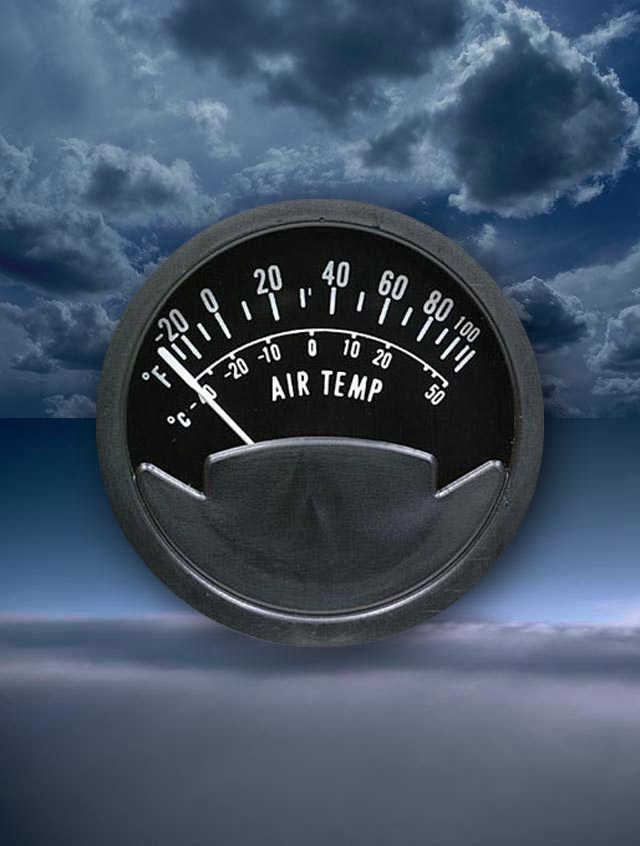
Westach OAT gauge