A Pilot's Guide to Inflight Icing
Module II - In the Airplane
Flight Operations
Section: Departure - Act
Start This SectionDeparture - Act Flight Operations
Aviate
After taxiing on contaminated surfaces, consider applying the brakes near the departure point to clear the brake surfaces of any accumulated slush. On take-off, observe icing speeds and power settings. Remember that if Type II or Type IV deicing fluids have been applied, the handling of the aircraft at low speed (e.g., on rotation) may be affected. The force required for rotation may be noticeably increased.

Slush may accumulate on wheels during taxi
Departure - Act Flight Operations
Aviate
If your aircraft is equipped with anti-icing systems, be sure that they are activated before entering suspected icing conditions (or as recommended by the manufacturer).
At the first sign of ice accretion, activate the deicing system. On most aircraft you should not wait for a substantial amount of ice to accumulate before inflating the boots. Waiting to activate the boots has contributed to several recent fatal accidents. Many aircraft and ice protection system manufacturers now recommend that you begin boot operation at the first sign of ice accretion. Review your aircraft POH or AFM for specific operational requirements.
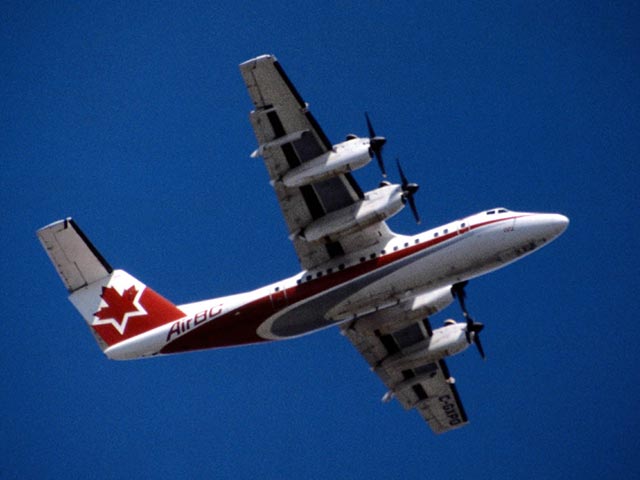
Activate anti-icing systems before entering icing conditions
Departure - Act Flight Operations
Aviate
Consider using a higher than normal airspeed when climbing in icing conditions.
Hand fly or use the airspeed mode for climb-out in icing conditions. Some autopilot modes may allow the airspeed to decrease to maintain a specified rate of climb or pitch attitude. If the autopilot is engaged in one of these climb modes, the airspeed could decrease to stall.
Modern autopilots are frequently equipped with different flight control modes. Before using the autopilot to climb in icing conditions, check your POH or AFM to be certain that you are using an autopilot mode approved for climbing in icing conditions.
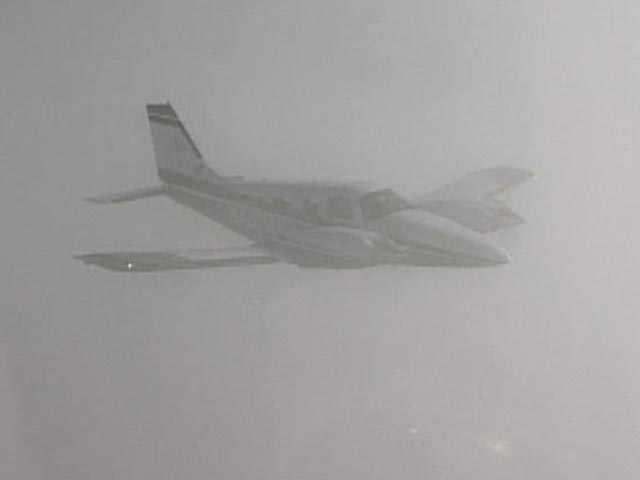
Consider climbing at a higher than normal airspeed
Departure - Act Flight Operations
Aviate
Pilot Action Recommendation
IF: You are in icing conditions
ACTION: Turn the pitot heat on before entering visible moisture and keep it on. If your POH or AFM allows, turn on the pitot heat prior to take-off 365 days a year. If the pitot tube is blocked, fly pitch and power instead of airspeed.
CUES: Temperature +2° to -20°C and visible moisture present.
WHY: A pitot tube blocked with ice will provide erroneous airspeed readings. With a blocked pitot tube, if the airplane ascends, the indicated airspeed will increase. If the airplane descends, the indicated airspeed will decrease.

Turn pitot heat on before entering clouds or precipitation
Related Information
Pitot tubes provide the primary source of total pressure to measure airspeed. Under some situations, ice can form inside a pitot tube and trap the current total pressure in the line.
Two situations that could cause this are an inoperative pitot-heat system, or a high liquid water content condition where the pitot heat cannot evaporate all of the liquid water before some of it gets into the pitot tube. If ice forms in the pitot tube, the indicated airspeed will be affected. If the aircraft remains at the current pressure altitude, no airspeed changes will be observed on the airspeed indicator regardless of the actual airspeed changes.
If the airplane ascends, the indicated airspeed will increase since the differences in the trapped total pressure and static pressure increase with altitude. Likewise, if the airplane descends, the indicated airspeed will decrease. These effects occur regardless of the actual airspeed of the aircraft.
These situations can lead to two possible events: 1) a stall could occur during an ascent since the pilot may react to the indicated increase in airspeed by slowing the airplane or 2) a steep dive could occur during a descent since the pilot may react to the decreased indicated airspeed by increasing the nose-down attitude.
FLUSHING, NY
MARCH 2, 1994
MD-82
The flight data recorder indicated that the pitot heat had not been turned on. A buildup of snow and ice in the pitot/static system tubes and ports resulted in erroneous airspeed readings during the attempted takeoff.
The erroneous airspeed reading consequently led the flight crew to reject the takeoff when the actual speed was 5 knots above V1.
THIELLS, NY
DECEMBER 1, 1974
B-727
On December 1, 1974, a B-727 took off from JFK bound for Buffalo, New York. The aircraft climbed to 31,000 feet. The flight crew declared an emergency due to loss of control and indicated they were experiencing a stall. The aircraft crashed near Bear Mountain, New York.
NTSB investigators discovered that the two pitot head heater switches were in the "off" position. Analysis of the flight data recorder and cockpit voice recorder revealed that the before take off checklist was followed incorrectly and the pitot heat was in the off position.
As the aircraft was climbing through 16,000 feet at 305 knots and a climb rate of 2,500 feet per minute, the airspeed and vertical speed indicators began to increase, without any corresponding change to engine power settings.
This created confusion among the crew and as the aircraft reached 23,000 feet the crew continued to pull back on the yokes resulting in an excessive AOA followed by a stall. The crew became disorientated and confused by the contradictory instrument readings and the aircraft went into an unrecoverable dive.
Tail mounted pitot tubes for the elevator feel system were also blocked with ice. This caused small movements of the controls to result in higher control movements and eventually higher vertical acceleration forces on the aircraft.
Pitot static systems blocked with ice can lead to erroneous and confusing instrument readings without a system failure.
JANUARY 19, 1995
X-31
On January 19, 1995 a NASA X-31 crashed due to icing of the airspeed total pressure probe.
The blocked probe made the airspeed read erroneously low as the aircraft descended, which caused the gains in the fly-by-wire flight control system to be too high for the actual airspeed.
Eventually, there was no gain margin and the aircraft went out of control. Fortunately, the pilot ejected safely.
Departure - Act Flight Operations
Navigate
Do not loiter in ice. Minimize your risk by minimizing your exposure to icing conditions.
When in stratus icing conditions, change altitude if ice begins to accrete quickly. Exposure to icing conditions is usually limited on departure because the aircraft will transit through the icing altitudes quickly. However, standard departure procedures or air traffic control instructions may require you to level off during the climb.
When climbing through cumulus icing conditions, encounters are usually short but may be very intense. However, your exposure could be prolonged if a line of cumulus is encountered. Do not fly along a line of cumulus clouds. Penetrate the line along the shortest path possible and fly a safe distance away on either side.

Don't loiter in ice
Related Information
DALLAS-FORT WORTH, TEXAS
NOVEMBER 1996
ATR- 42
Climbing through 3,000 feet, I noticed ice rapidly accumulating on the aircraft. At 3,500 feet both side windows were completely glazed with ice, including the heated portion of the side window.
The captain and I briefly discussed the situation, noting at least 1 1/2 inches of clear ice on the ice probe, including the streaming water and freezing rain we experienced during the climb. Ice was continuing to build on the aircraft at a rapid rate, with no assurance from ATC of a higher altitude assignment. We decided most of the accumulation was acquired between 3,000 to 4,000 feet and a descent to 2,000 feet and return to DFW was the best escape.
I reported to ATC that our flight was experiencing severe icing conditions and requested 2,000 feet and vectors to DFW. Total duration of time from take off to this point was approximately 4 to 5 minutes.
Descending through 2,500 feet I noticed some of the ice buildup on the heated portion only of the side window was beginning to shed. At 2,000 feet, ice accretion had stopped. On final approach I noted the high power setting the captain had to use to maintain GS, an indication of the large amount of ice we were carrying.
Post-flight inspection revealed what was left of a ridge of ice, measuring approximately 18 inches long, 1/2 inches wide and 1/4 to 3/8 inches high (ragged). This was found on the right wing between the engine nacelle and the break between the new style de-ice boot and the old de-ice boot. Ice was beginning to form between the top portion of the ice boot and the beginning of the top part of the wing.
Departure - Act Flight Operations
Communicate
If ice is suspected, be prepared to request deviations from ATC instructions and departure procedures.
You should request immediate altitude and/or heading changes, as appropriate, even if they conflict with standard departure procedures. After stating that you are in icing, clearly and firmly communicate the urgency of your request to the controller. State what you want, when you want it, and why.

If icing is suspected, request deviations from ATC
Related Information
Pilot: "Approach, this is NASA 616. Uh, we're getting a fair amount of icing."
ATC: "NASA 616, spec lower in one-zero miles."
Pilot: "Approach, this is NASA 616. We're going to need a different altitude soon. We're picking up quite a bit of icing."
ATC: "NASA 616, reports no icing at 6000, tops are at 8000, clear above. Say your intentions."
Pilot: "This is NASA 616. We'll take 6000."
ATC: "NASA 616, traffic twelve o'clock, five miles westbound at nine thousand. Turn right at heading 3-2-0 and descend and maintain 6000."
Pilot: "NASA 616, turn right 3-2-0 out of 10 for 6. We're in IMC."
Pilot: "Approach, this is NASA 616. We're in severe, clear ice. We need lower immediately."
ATC: "NASA 616, descend and maintain 6000."
ATC: "NASA 616, how's your ride at 6000?."
Pilot: "This is NASA 616. Negative icing here at 6000."
Departure - Act Flight Operations
Communicate
If severe icing is encountered, it is critical that ATC clearly understand your situation.
If you have to, break in to the radio stream. Tell ATC that you are in severe icing and need an immediate deviation in flight path or altitude. Let the controllers know if you are unable to comply with any instructions because, in your judgment, it would compromise the safety of the flight. Be prepared to demand an appropriate clearance out of the icing conditions. If necessary, declare an emergency to obtain priority handling.
Be prepared to demand a clearance out of icing
Related Information
Grant Besley, DC-10 Captain
Fred Ashman, MU-2 Pilot
Departure - Act Flight Operations
Communicate
If necessary, take immediate actions and notify ATC of your actions when you are able. If a deviation from the ATC clearance or any other emergency action is required, consider squawking 7700 if you must act before you can effectively break in to ATC communications. Do not wait until it is too late.
Declaring an emergency (or squawking 7700) is a tool you have to obtain priority handling from ATC. Use it whenever you need it.

If necessary, take immediate actions and notify ATC when able
Departure - Act Flight Operations
Communicate
Whenever you have a serious icing encounter, make a PIREP to ATC or Flight Service as soon as workload permits. Be sure to say that you have a "Pilot Report" to ensure that the report is properly recorded and available for other pilots. Making a PIREP will help other pilots.
If you encounter icing, make a PIREP