A Pilot's Guide to Ground Icing
Module II - Cues
Exercises
Section: Situated Questions
Start This SectionSituated Questions Cues
Use the questions on the following pages to help review what you have learned in this module.
For each question, click on the answer that you think is correct to get a response. If you are not correct (or if you would like to see the responses to the other choices), click on another option. If you do not understand why an option is correct or incorrect, please review the relevant section of this module.
This is not a test. Your answers are not recorded and no score will be calculated.
Situated Questions Cues
Question 1
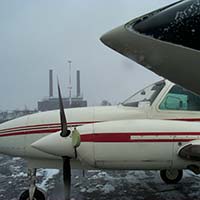
The ATIS reports that light snow is falling at the airport, but from where you sit it looks a lot more intense. How can this be?
Situated Questions Cues
Question 2
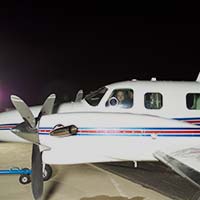
You are planning an early departure tomorrow morning. The current weather at 2000 local is: wind 210 at 03 KT, visibility 10 SM, clear, temperature 3C, dew point -1C, and altimeter 30.02 in HG (1016.6 hPa). The forecast calls for winds, visibility and cloud cover to remain unchanged through the night. Should you ask the FBO to put the plane in the hangar overnight to avoid frost?
Situated Questions Cues
Question 3
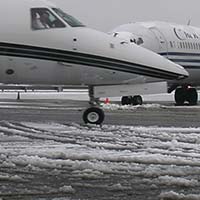
You are flying a light jet for a fractional airline. After landing, you fuel for the next leg to leave with new passengers shortly. The fuel trucks have sat out overnight in the below freezing temperatures. There is a high overcast at the airport. The warm front that just passed through has left the air warm (+ 8C) and moist. Should you be concerned about frost?
Situated Questions Cues
Question 4
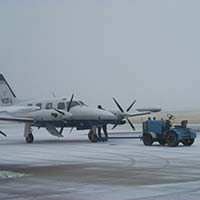
You are flying a light twin certified for flight into known icing, planning an early morning departure. It’s cold and foggy. The METAR is reporting an obscured ceiling in freezing fog. The aircraft was parked in an unheated hangar overnight so it doesn’t need to be de-iced. Should you be concerned about the freezing fog?
A. No. Unless you are greatly delayed on the ground, the freezing fog will not be a problem.
B. Yes. Freezing fog could lead to ice accretion on takeoff roll and after lift-off. Be sure to activate your ice protection system.
C. Yes. Freezing fog could freeze on your aircraft during taxi.
D. Both B and C
Situated Questions Cues
Question 5
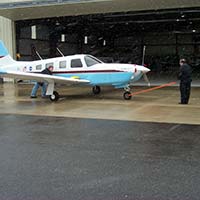
You have just pulled your aircraft out of an unheated hangar into the falling snow. According to the ATIS, the winds are light, visibility is 2 ½ SM in light snow with a 600 foot overcast ceiling. The temperature is -12C; the dew point is –14C. As you look out the cockpit window at the wing, you can see the snow swirling over the wing. Is it likely that the snow will freeze on the wing?
Situated Questions Cues
Question 6
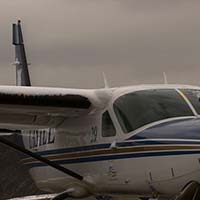
You are the pilot of a high wing single engine aircraft. When you arrive at the airport, the wind is calm and the temperature is –10C. Your aircraft has been parked out all night and there appears to be a light coat of snow on it. Will you need to de-ice the aircraft?
A. No. A light coating of snow is not a problem.
B. No. Under these conditions, the snow will blow off during the takeoff roll.
C. Yes, but a broom will probably be enough. Under these conditions, the snow won't stick to the aircraft.
D. Yes. Under these conditions snow is likely to freeze on the aircraft.
Situated Questions Cues
Question 7
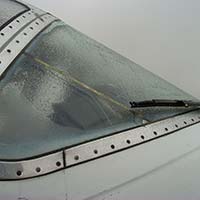
You are the Captain of a turbojet. As you depart the de-icing pad after de- and anti-icing, ATIS is reporting light freezing rain. As you taxi to the departure runway, the intensity of the precipitation appears to increase but the ATIS remains unchanged. Should you:
A. Depart as long as you can leave before the holdover time for freezing drizzle.
B. Depart as long as you can leave before the holdover time for light freezing rain.
C. Depart as long as you can verify that the anti-icing fluid has not failed.
D. Wait. No aircraft is certified for flight in freezing rain.
Situated Questions Cues
Question 8
You are the Captain of a high wing turboprop. The temperature has been below freezing all day, but the winds have picked up and it’s raining lightly now. From the second floor of the FBO you have a good view of your aircraft. The entire aircraft looks shiny and wet. Given the lousy weather, you’d like to conduct as efficient a preflight as possible. Do you need to get a ladder to inspect the wings or under these conditions would a visual inspection suffice?
A. Under these conditions, you should get a ladder and physically touch the wings.
B. You don't need the ladder; your visual inspection from the FBO window will suffice.
C. You don't need to physically touch the wings, but you need to be closer to conduct a proper visual inspection.
D. Whenever icing is a possibility, you should get a ladder and physically touch the wings. However, because it’s raining, icing is unlikely and a visual inspection will suffice.