A Pilot's Guide to Ground Icing
Module IV - De-Icing Operations
How to take it off
Section: Fluid Application Procedures - Twin Turboprop
Start This SectionFluid Application Procedures Twin Turboprop
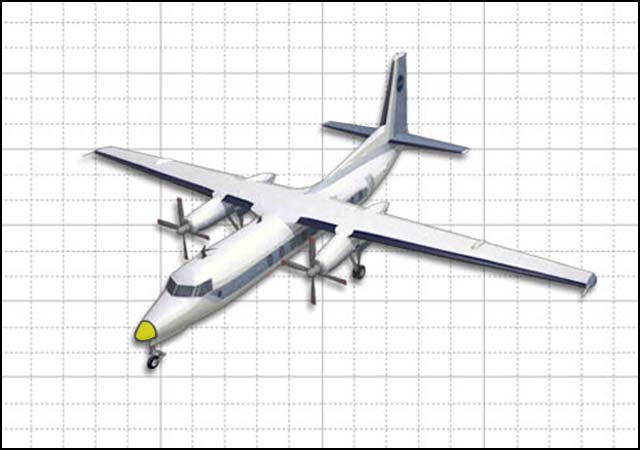
Sensors, Probes, & Ports
Clear probes mechanically. Do not spray directly, though in some cases, indirect spray wash-down may be acceptable. Spraying into openings such as static ports, pitot tubes, air intakes, temperature sensors, etc. can damage the equipment. Residues can cause faulty readings.
Fluid Application Procedures Twin Turboprop
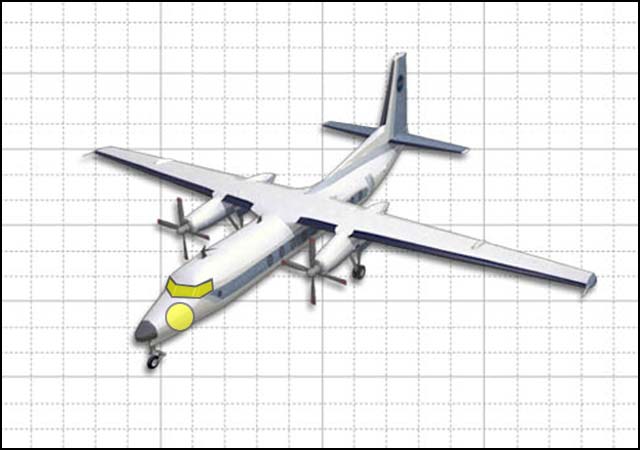
Fuselage
Start at the top, sweep top to bottom. Spraying the upper section with a heated fluid first allows the fluid to flow down, warming the sides of fuselage and removing accumulations. Be careful not to damage protruding equipment (e.g., antennae).

Fluid Application Procedures Twin Turboprop
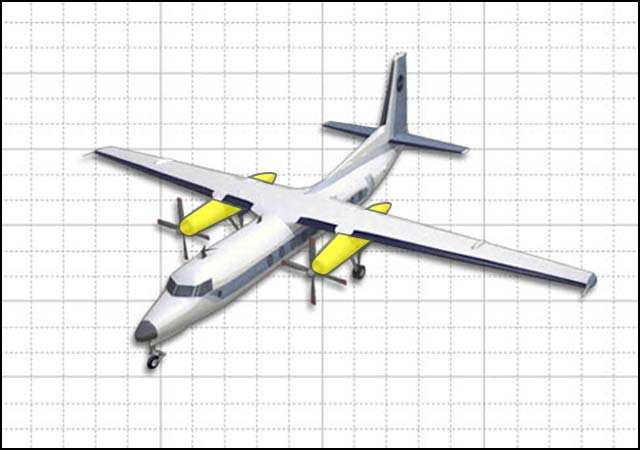
Engine - Turboprop
Use the engine/airframer manufacturers recommended procedures for engine ice removal. Use only mechanical means or hot air to de-ice the engine inlet nacelle area, being careful not to damage the engine or its components.
Assuring that the inlet nacelle anti-ice heat is turned on while operating on the ground will reduce inlet ice build-up and may assist in ice removal.
Avoid glycol spray near the inlet of the engine since the fluid may damage the engine and glycol vapors could enter the aircraft cabin area through the engine bleed air system.
Fluid Application Procedures Twin Turboprop
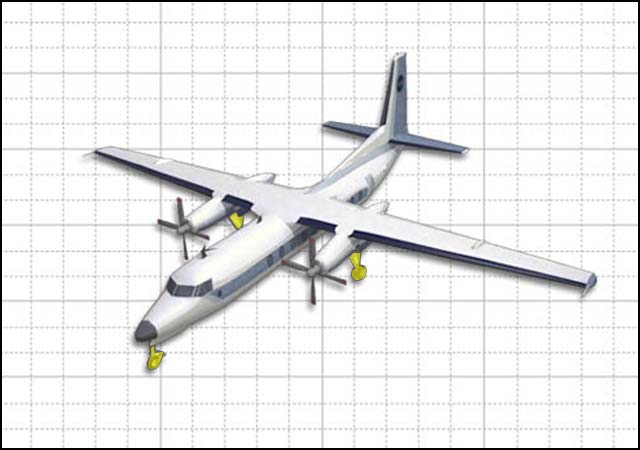
Landing Gear (including doors, wheels, and wheel bays)
Use heated air, if available, but avoid overheating. If de-icing fluid is your only option, use a low pressure fan spray or mist to avoid forcing fluid into bushings or damaging wiring. Some manufactures say to avoid against spraying fluid directly onto wheels and brakes. If tires are frozen to the ground, spray or heat lightly at the tire base.
Fluid Application Procedures Twin Turboprop
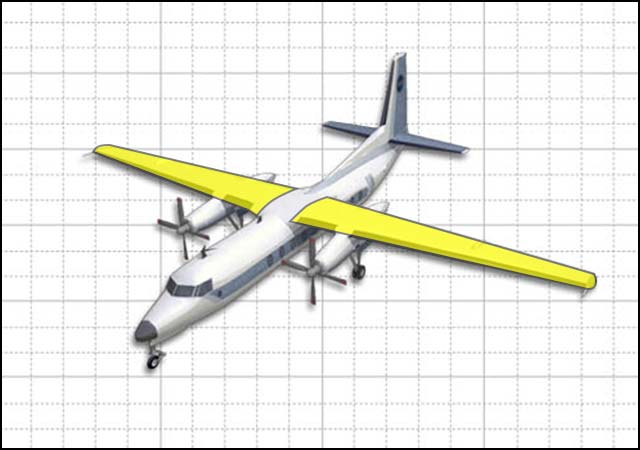
Wing
Sweep from leading to trailing edge. Failure to do so could force contamination into aerodynamically quiet areas. You may start at the wing tip or root. For anti-icing, the goal is to coat the wing with a nominally uniform layer.
Fluid Application Procedures Twin Turboprop
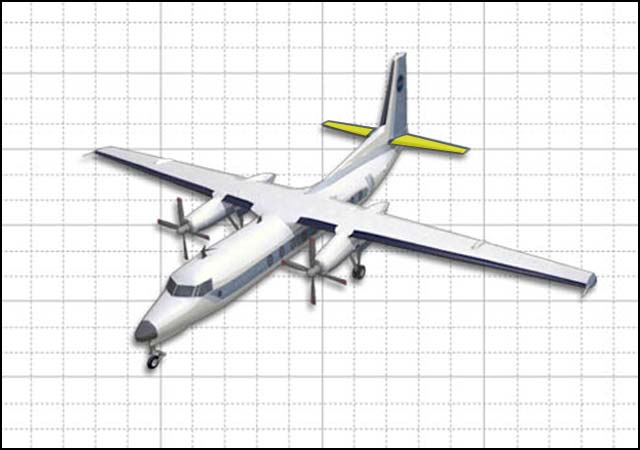
Horizontal Stabilizer
Sweep from leading to trailing edge. Make sure the anti-icing fluid forms a nominally uniform layer.
Fluid Application Procedures Twin Turboprop
Vertical Stabilizer
Start at the top, sweep front to back.

Fluid Application Procedures Twin Turboprop
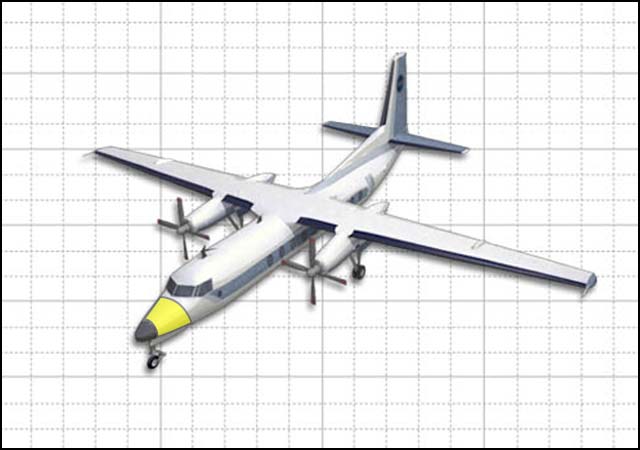
Cowling
Remove contaminants from the area forward of the windscreens so they don't blow back during takeoff and obscure your vision and/or be ingested into your engine intakes. For turboprop and piston airplanes, de-ice mechanically (broom, squeegee, hot air, etc.), de-ice with fluid prior to start, or shutdown to spray and then restart.
Fluid Application Procedures Twin Turboprop
Radome
De-ice to eliminate snow/ice from being projected into your field of view during take-off, and ensure proper operation of any sensors in this area.