A Pilot's Guide to Ground Icing
Module V - Anti-Icing Operations
How to keep it off
Section: Timing Considerations
Start This SectionTiming Considerations Anti-Icing Operations
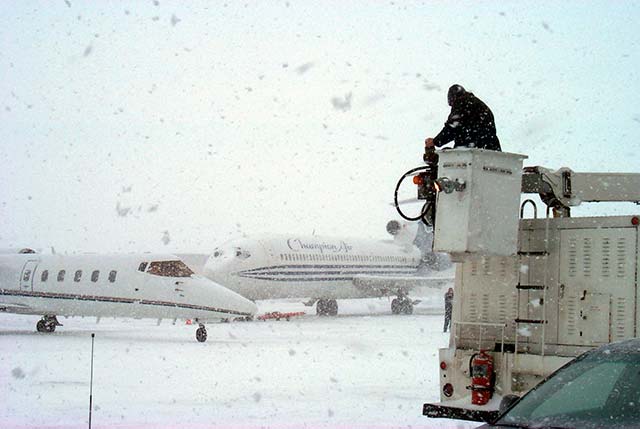
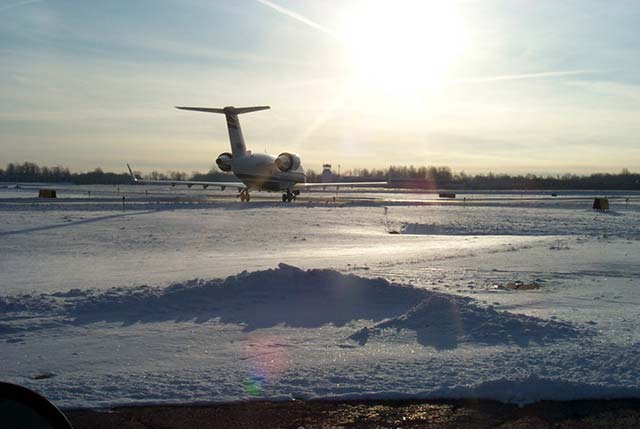
Timing is everything when you mix weather and local traffic volume with your HOT.
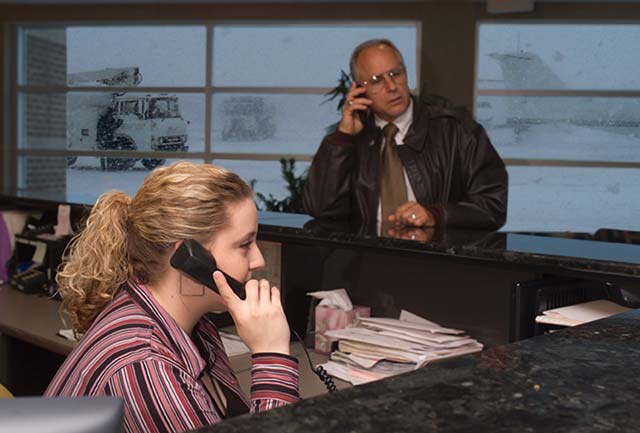
At controlled airports, obtain your clearance prior to starting the de/anti-icing process. Also, if the weather is down and the local traffic volume is up, anticipate long taxi times that will eat into your holdover time. You may want to query ground control about the expected wait prior to starting the de/anti-icing process especially if you use Type I fluid. If the expected time will greatly exceed your HOT, then you may want to wait until traffic volume decreases or the precipitation stops. Query ATC about their high traffic times to find out if a short delay will allow for an expedited taxi and takeoff.
Related Information
CHILLICOTHE, OH – USA
JANUARY 19, 2001
PA-46
When the private pilot, co-pilot and passenger arrived at the airport it began to snow heavily. The airplane was pre-flighted, then towed out of the heated hangar and fueled. The private pilot taxied to the end of the 5,400 foot long runway, parked, and performed an engine run-up. After the run-up, the co-pilot reached the Elkins, West Virginia, AFSS on his cell phone, received a weather briefing, filed an IFR flight plan, and requested an IFR clearance. Since Elkins was not the primary AFSS for the area, the briefer placed him on hold to service his request. The call got disconnected, so he called the FSS back. Due to the long hold time, the co-pilot then called Indianapolis Center and received an IFR clearance. Once the clearance was obtained, the private pilot performed another engine run-up and noticed that about 3 to 4 inches of slush had accumulated on the runway, and about 1/2 to 3/4 inches of slush had accumulated along the surface of both wings. The pilots discussed if they should return to the hangar and wipe off the wings, but agreed that the slush would "blow-off" during the take-off roll. The private pilot estimated that he used about 4,500 feet of the runway before he obtained 80 knots (Vr). He rotated the airplane, but it did not lift normally. To avoid obstructions, the private pilot simultaneously turned the aircraft to the right, and retarded the throttle. The airplane touched down, slid, turned, and came to rest upright facing the runway. Examination of the airplane revealed that both wings were covered with snow, and localized areas of ice were found along the top surfaces of both wings near the trailing edge. The air intake and pitot tube were absent of debris. According to the airplane's pre-flight checklist, the wings and empennage surfaces should be clear of ice, snow, and frost prior to take-off. The pilot estimated that from the time the airplane was pulled from the hangar to the time of the accident was about 1-hour. The pilot also reported that there were no mechanical deficiencies.
The National Transportation Safety Board determines the probable cause(s) of this accident as follows:
The pilot's improper pre-flight planning and failure to follow the published checklist procedures, which resulted in ice and snow not being removed from the wings prior to take-off.
Timing Considerations Anti-Icing Operations
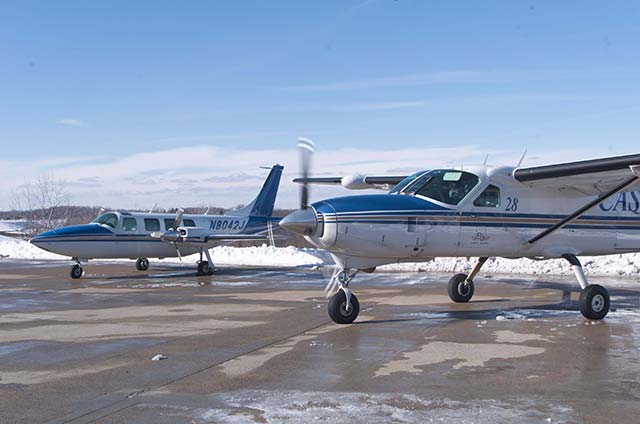
At non-towered airports, have the de/anti-icing equipment standing by prior to requesting your clearance void time. Also, request a void time that gives you enough time to complete the de/anti-icing process, perform the necessary inspections, and takeoff.
At some airports you can arrange for the de/anti-icing truck to meet you near the departure end of the runway.


Related Information
Time: 12:00 UTC
Pilot: "Cleveland approach N1234 is on the ground at LPR, needs to deice, and is requesting the clearance void time to start at 12:10 and be void at 12:30"
If your request is within reason, ATC should be able to accommodate, but be prepared to wait if there is inbound or crossing traffic.